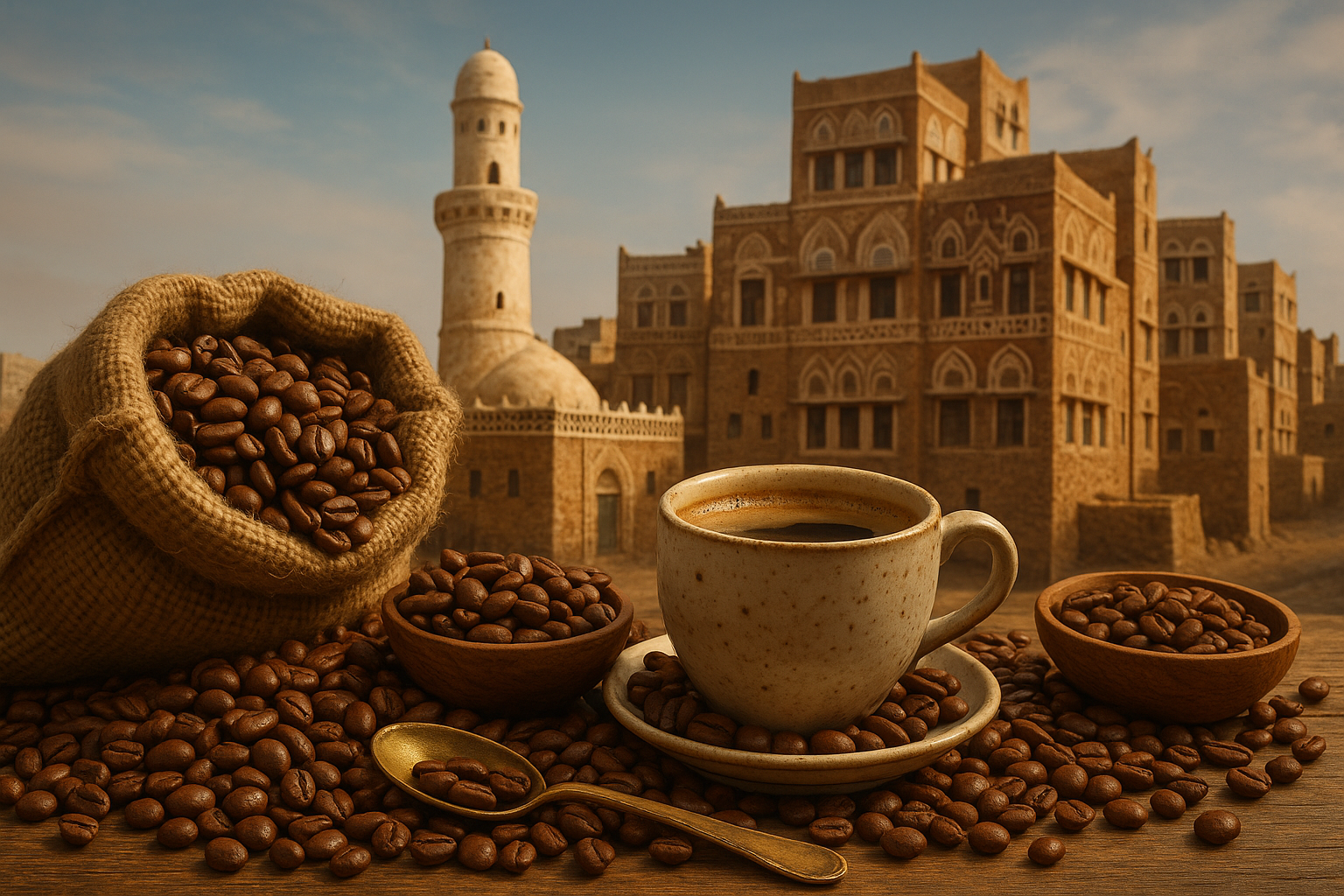
The Origin of Moka Coffee
Moka coffee originates from the port city of Mocha in Yemen, a historically important location along the Red Sea. Its story dates back to the Middle Ages, when the missionary Marco Polo accidentally purchased coffee from Mocha during his long journey from Europe to the Arab world. However, it wasn’t until the 17th century that Moka coffee became widely known in Europe, thanks to a Jesuit priest named Pedro Páez. Mocha gained prominence for its trade exchanges due to its strategic position, serving as a gateway between the Indian Ocean and Asia.
Authentic Moka and Market Confusion
On today’s market, Moka coffee is easily mistaken due to widespread false advertising. Most consumers have only heard of Moka by name and are unfamiliar with the actual appearance of Moka beans. In Vietnam, Moka coffee is primarily cultivated in the Cầu Đất area of Đà Lạt. There, Moka trees face challenges in productivity and pest resistance, leading many farmers to replace them with the higher-yielding Catimor variety. Nonetheless, some growers are committed to preserving this heirloom variety as part of their cultural and natural heritage.
Economic Value and Pricing of Moka Coffee
Renowned for its exceptional quality, Moka coffee commands a very high price on the market. As of now, 1 kilogram of premium-grade Moka can sell for over 23 million VND, reflecting its rarity and cultivation difficulty. Though demand remains limited due to high pricing, coffee enthusiasts continue to seek out Moka for its unique and refined character.
Preservation and Future of Moka Coffee
Several investment projects from Japan have previously attempted to persuade local farmers in Đà Lạt to preserve the Moka variety by offering guaranteed purchase agreements. However, for various reasons, these initiatives did not achieve the desired success. Despite that, Moka coffee still holds a special place among connoisseurs around the world. Stronger preservation efforts are needed to ensure that this coffee variety not only survives but thrives in the years to come.
