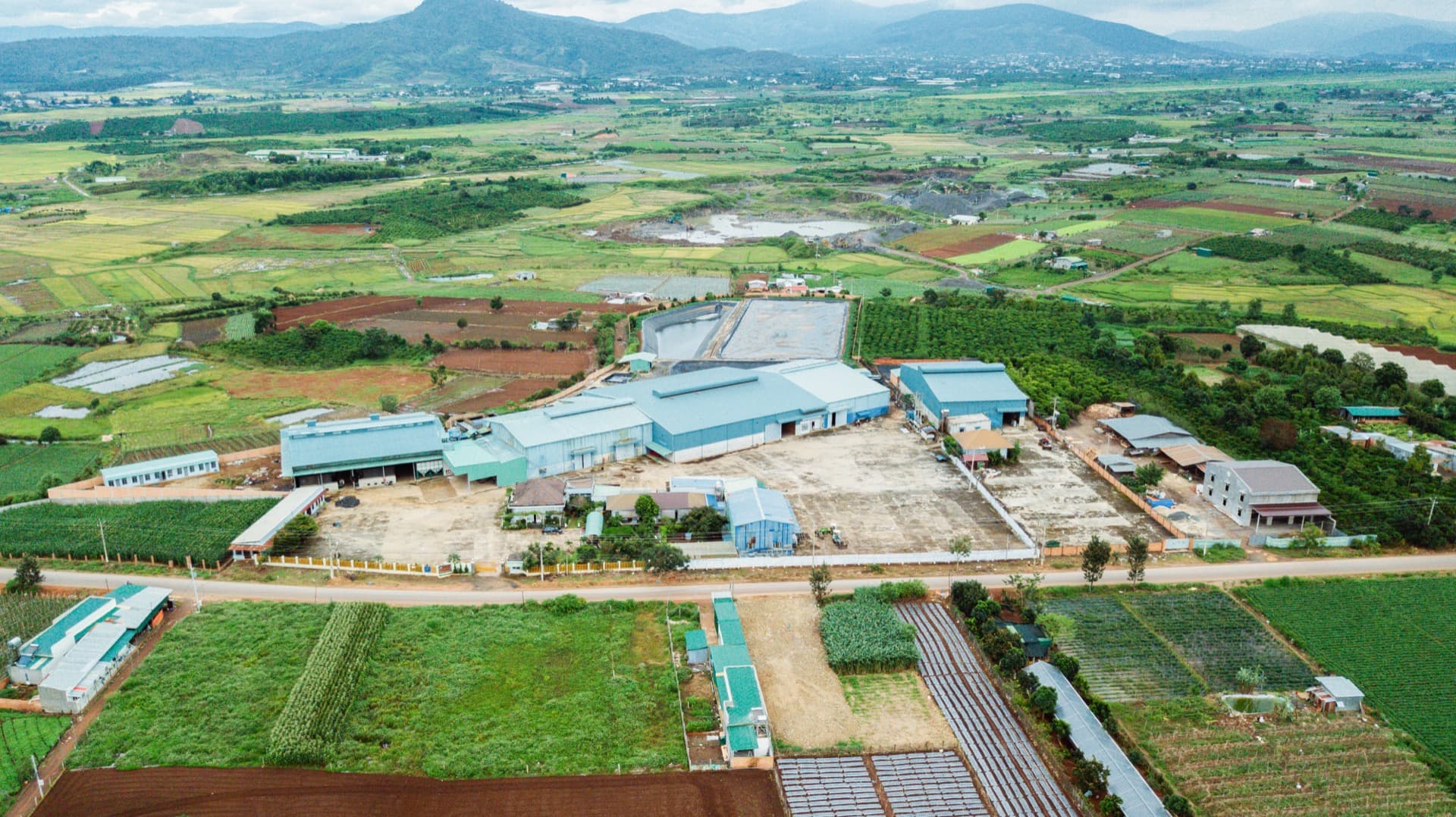
New Arabica Processing Line Opens in Binh Duong
VCG commissioned a state-of-the-art Arabica wet-mill and roasting facility in Binh Duong Province, adding 6,000 MT of annual processing capacity for the Japanese and Korean specialty markets.
VinaCoffee Group officially commissioned its new Arabica processing line at our Binh Duong manufacturing complex on January 15, 2026. The facility represents a $2.1 million investment in value-added processing capacity, featuring a Probat UG-Series roaster with a throughput of 1,500 kg per hour, a Buhler Sortex optical color sorter capable of detecting defects at the individual bean level, and a fully automated nitrogen-flush packaging line from ICA SpA. The total annual capacity is 6,000 metric tons of roasted and ground Arabica coffee.
The investment targets a specific market opportunity: the growing demand for premium Vietnamese Arabica in Japan and South Korea. Japanese imports of Vietnamese Arabica grew 34% in 2025, driven by specialty roasters in Tokyo and Osaka who have discovered the unique flavor profile of beans grown at 1,200-1,600 meters altitude in Cau Dat (Lam Dong) and Son La province. The new processing line allows VCG to deliver roasted coffee directly to these buyers, rather than shipping green beans for roasting in-destination.
Quality control at the new facility leverages VCG's proprietary grading protocol, which exceeds the SCA (Specialty Coffee Association) standard. Every production batch undergoes physical grading (screen size, moisture content, defect count), sensory evaluation by our Q-grader team of four certified professionals, and chemical analysis for ochratoxin A and pesticide residues. The target quality score for Arabica lots processed in Binh Duong is 82 points or above on the SCA cupping scale, placing them firmly in the specialty category.
The facility also incorporates sustainability features aligned with VCG's ISO 14001 environmental management certification. Chaff and silverskin byproducts from the roasting process are collected and supplied to a local biomass energy producer, eliminating approximately 400 tons of annual waste. Water used in the wet-mill section is treated through a three-stage biological filtration system before discharge, meeting QCVN 40:2011 industrial wastewater standards. Rooftop solar panels provide approximately 30% of the facility's electricity requirements.
The first commercial shipments from the new line departed for Osaka in late January 2026 — 12 containers of medium-roast, whole-bean Cau Dat Arabica for distribution through ITOCHU's specialty retail network. Initial buyer feedback has been exceptionally positive, with cupping notes highlighting the stone fruit, dark chocolate, and honey sweetness characteristics that distinguish Vietnamese Arabica from Central American and East African origins.
Quang Nguyen
CEO, VinaCoffee Group


